Last updated: 13 October 2026 · By Wes Kennedy, Ag Equine Supplies
The quick answer
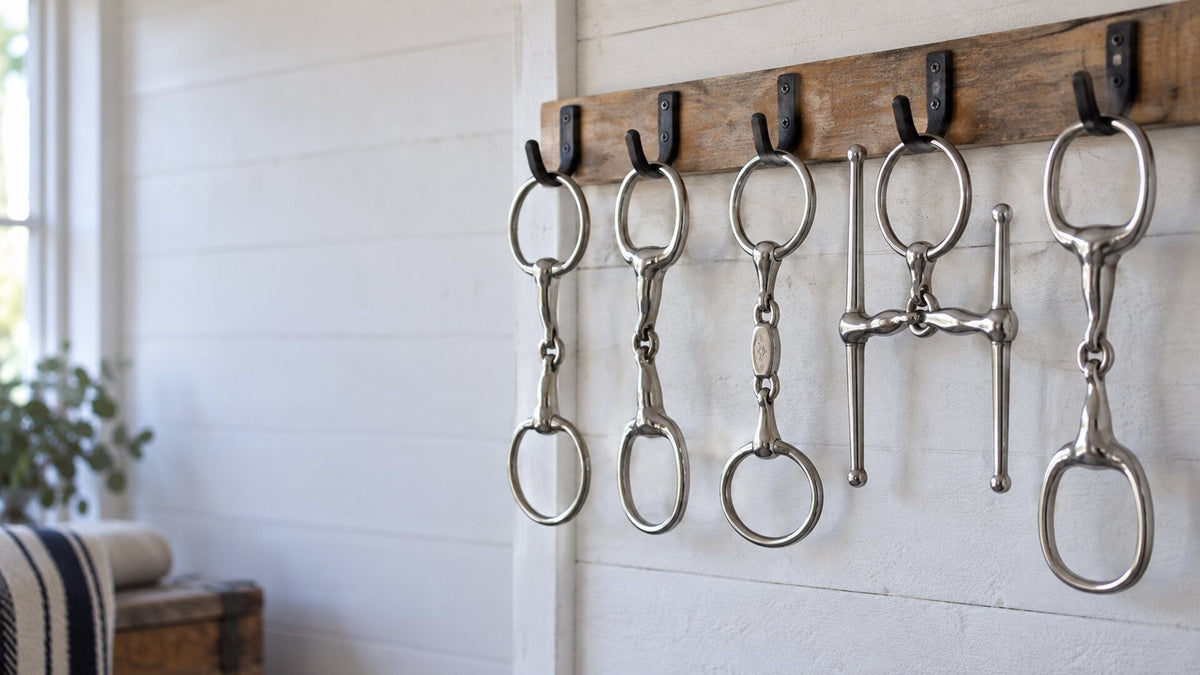
A snaffle bit works by direct pressure: the rein pulls straight on the mouthpiece, with no leverage. That is what makes it a snaffle, not whether it is jointed. The rings change how it sits: a loose ring moves and encourages mouthing, an eggbutt or D-ring stays still, and a full cheek helps steering. The mouthpiece changes where pressure lands. To fit a bit, measure the mouth, choose a mouthpiece that leaves a small gap each side, and adjust the cheekpieces until there are one or two wrinkles at the corners of the lips. A Tom Thumb is not a true snaffle.
In this article
- What is a snaffle bit?
- What are the different snaffle rings?
- Which snaffle mouthpiece should you choose?
- Does the bit material matter?
- How do you fit a bit?
- Which bits are not snaffles?
- The bottom line
- Questions we're often asked
Snaffles are the most common bits in Australia, and the place most horses start. But "snaffle" covers dozens of designs, and the difference between a loose ring and an eggbutt, or a single and a double joint, can change how your horse goes.
This guide explains the main snaffle bit types, what each part does, and how to fit a bit correctly. If your horse is fussing in the contact, check the fit before you change the bit.
What is a snaffle bit?
A snaffle is any bit where the rein attaches directly in line with the mouthpiece, so a pull on the rein puts the same pressure on the mouth. There are no shanks and no leverage.
That is the key point. A snaffle does not have to be jointed: a straight bar or mullen mouth on snaffle rings is still a snaffle. And a jointed bit with shanks, such as a Tom Thumb, is not.
What are the different snaffle rings?
| Ring type | How it behaves | Suits | Example |
|---|---|---|---|
| Loose ring | Rings slide through the mouthpiece, so the bit moves and the horse can play with it | Horses that lean or set their jaw; riders who want a mobile contact | Showcraft SS Ring Snaffle |
| Eggbutt | Fixed, barrel-shaped joints hold the bit still and cannot pinch the lips | Young horses and horses that dislike a moving bit | Showcraft SS Flat Ring Eggbutt |
| D-ring | Fixed, with a straight edge against the cheek that helps with turning | Racing, young horses, horses that need help steering | Showcraft D-Snaffle Bit |
| Full cheek | Long cheeks stop the bit sliding through the mouth and press on the side of the face when turning | Young horses learning to steer | Showcraft SS Full Cheek Eggbutt |
| Baucher (hanging cheek) | Hangs the mouthpiece from the cheekpiece, so it sits very still in the mouth | Horses that fuss with a moving bit | Showcraft Gold Baucher Bit |
Loose rings can pinch the corners of the lips if the bit is too wide or the holes are worn. Rubber bit guards help, as do no-pinch designs such as the Cavalier Loose Ring Training Snaffle with No Pinch Rings.
Which snaffle mouthpiece should you choose?
Single jointed
The classic snaffle. One joint in the middle, so the bit folds when you take a contact, putting pressure on the bars, tongue and lip corners. Simple and widely used. The Showcraft Snaffle Bit is a budget starting point.
Double jointed
A centre link or lozenge breaks the bit into three pieces, so it wraps around the tongue more evenly. Many horses with a fleshy tongue or low palate go better in one. Options include the Cavalier Eggbutt with Training Link, the Showcraft SS Oval Link Training Bit and the Cavalier Full Cheek Double Jointed Bit.
Shaped and specialist mouthpieces
- Curved mouth bits follow the shape of the mouth, leaving more room for the tongue. See the Showcraft SS Curved Mouth Eggbutt.
- Dr Bristol uses an angled centre plate. It acts differently from a flat link, so ask before choosing one. See the Showcraft SS Dr Bristol Eggbutt.
- Waterford mouthpieces have a chain of balls, which is hard for a horse to lean on. See the Cavalier Full Cheek Waterford Bit.
Thickness
Thicker is not always kinder. A thick mouthpiece spreads pressure, but a horse with a small mouth or a big tongue may find it crowded. The 14mm and 21mm versions of the same bit let you compare.
Does the bit material matter?
| Material | Why riders choose it |
|---|---|
| Stainless steel (SS) | Durable, easy to clean and does not rust. The everyday standard. |
| Sweet iron and blue steel | Oxidises over time, and many riders find horses mouth it readily. See the Showcraft Sweet Iron Curved Mouth Eggbutt and Blue Steel Barrel Snaffle. |
| Copper and golden brass | A warmer metal some horses accept well. See the Showcraft French Copper Mouth Eggbutt and Cavalier Golden Brass Eggbutt. |
| Nickel plated (NP) | Low cost. Plating can wear and chip over time, so check it regularly. |
How do you fit a bit?
1. Measure the mouth
Lay a piece of string or a bit measuring tool across the mouth where the bit sits, mark both sides at the lip corners, and measure between the marks. Bits are sold by the length of the mouthpiece between the rings, usually in inches (such as 5" or 5.5").
2. Choose the width
A loose ring needs a little room each side so the rings do not pinch, roughly a finger's width in total. Fixed rings such as an eggbutt or D-ring can sit a little closer. Too wide and the bit slides and the joint drops low; too narrow and it pinches.
3. Set the height
Adjust the cheekpieces until there are one or two small wrinkles at the corners of the lips. No wrinkles means it is too low and may bang the teeth; lots of wrinkles means it is too high and pulling.
4. Check it in action
Take a contact and look at how the bit sits. The joint should not poke into the roof of the mouth. Watch your horse's reaction over the next few rides, and have teeth checked regularly, because dental issues often show up as bit problems.
Which bits are not snaffles?
Some bits carry "snaffle" in the name but use leverage. These include:
- Tom Thumb. Short shanks below the mouthpiece add leverage and poll pressure. See the Showcraft SS Tom Thumb Bit.
- Pelham and Kimblewick. A curb chain and leverage action. See the Showcraft SS Jointed Mouth Pelham and the Showcraft Kimblewick.
- Gag bits. The rein runs through the cheek, adding lift and poll pressure, as on the Feather Collection Smooth Snaffle Gag Bit.
These are useful tools for experienced riders and specific horses, but they work differently from a true snaffle. If you compete, check the current rules for your discipline before choosing a bit, as permitted bits vary.
The bottom line
A snaffle bit uses direct pressure with no leverage. Choose the rings for how still you want the bit, the mouthpiece for where you want pressure, and fit it carefully: right width, one or two wrinkles, and a horse that accepts the contact.
Browse our full range of horse bits and bridles, or contact us if you would like help choosing. Setting up a paddock for spring? Read our guide to electric fencing for horses.
Questions we're often asked
What is the mildest snaffle bit?
No bit is mild in rough hands, and every horse is different. A well fitted double jointed or mullen mouth snaffle is a common gentle choice, because it spreads pressure evenly across the mouth.
What is the difference between a loose ring and an eggbutt snaffle?
A loose ring snaffle has rings that slide through the mouthpiece, so the bit moves. An eggbutt has fixed, rounded joints that hold the bit still and cannot pinch the lips.
What size bit does my horse need?
Most horses take a 5" to 5.5" bit, ponies smaller and large horses bigger. Measure the mouth with string or a bit measure, then allow a little room each side, especially for a loose ring.
Is a Tom Thumb a snaffle?
No. A Tom Thumb has short shanks that add leverage and poll pressure. A true snaffle has no leverage, with the rein pulling directly on the mouthpiece.
How do I know if the bit fits?
A well fitted bit leaves one or two wrinkles at the corners of the lips, does not pinch at the sides, and does not slide across the mouth. Signs of a poor fit include head tossing, gaping and rubs at the lip corners.
About the author
Wes Kennedy writes for Ag Equine Supplies.
Sources
- Bit range and specifications as stocked by Ag Equine Supplies (Showcraft, Cavalier, Eureka and Zilco)