Last updated: 13 October 2026 · By Wes Kennedy, Ag Equine Supplies
The quick answer
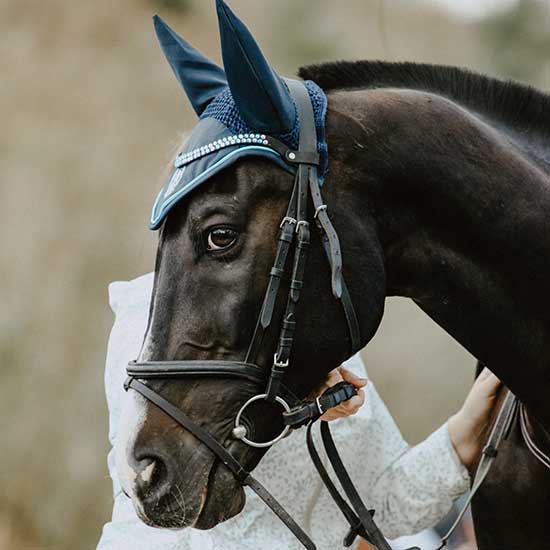
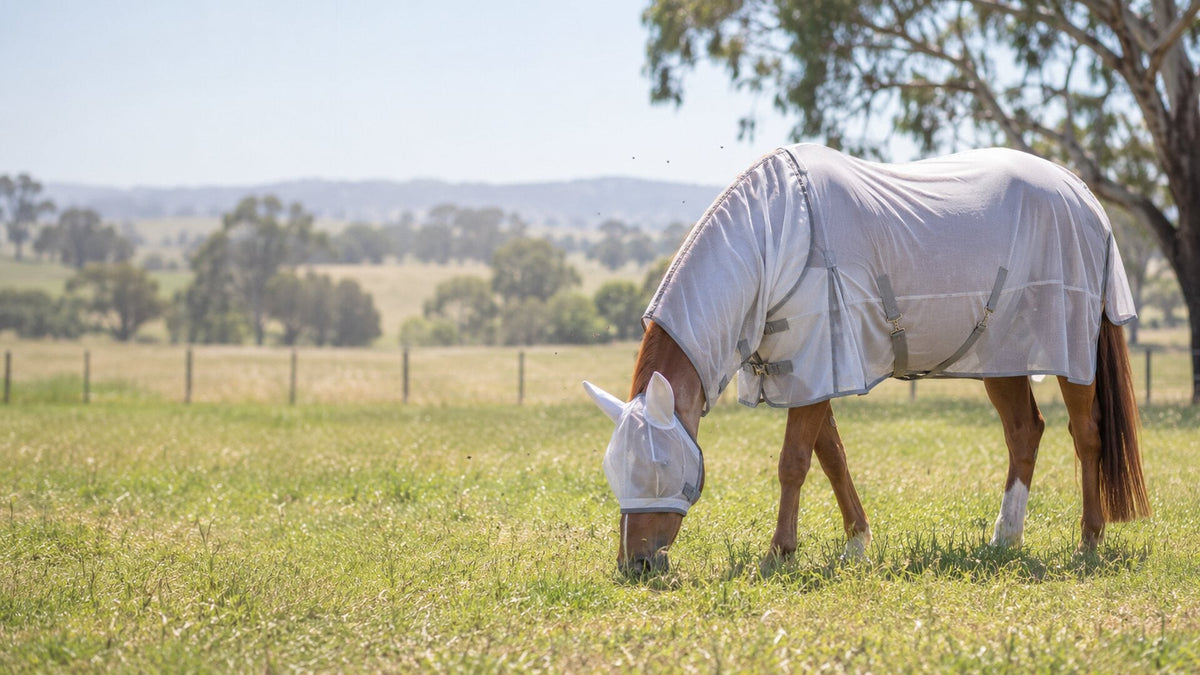
A fly mask for horses is a mesh hood worn in the paddock to keep flies off the eyes, and often the ears and nose. A fly veil, also called a ride-on mask or ear bonnet, is worn under the bridle while you ride. Most horses in an Australian summer need a turnout mask, and sensitive horses need a ride-on option too. Fit matters most: the mesh should sit clear of the eyes and lashes, with no rubbing at the poll or cheeks. Add a nose cover for pink noses, and leg wraps and fly repellent for horses that stamp and kick.
In this article
- What is the difference between a fly mask and a fly veil?
- Which fly mask is right for your horse?
- How should a fly mask fit?
- What other fly protection does a horse need?
- What about Queensland itch?
- How do you look after a fly mask?
- The bottom line
- Questions we're often asked
A fly mask for horses is the simplest piece of summer gear you can buy, and one of the most useful. Flies gather around the eyes for moisture, and a horse that spends the day shaking its head and rubbing its face on fence posts is uncomfortable and easier to injure.
As the weather warms up, here is how to choose between a turnout mask and a ride-on veil, how to get the fit right, and what else to add for a comfortable horse through the fly season.
What is the difference between a fly mask and a fly veil?
| Fly mask (turnout) | Fly veil (ride-on) | |
|---|---|---|
| When it is worn | In the paddock or yard | Under the bridle while riding |
| What it covers | Eyes, often ears, sometimes nose | Eyes and ears, or ears only (ear bonnet) |
| How it fastens | Hook and loop strap under the jaw | Sits behind the ears and is held by the bridle |
| Example | Woof Wear Fly Mask | Woof Wear Ride-On Fly Mask, Cavallo Ride Fly Free Mask |
You will see "fly veil" used for both in Australia. If it fastens under the jaw, it is a turnout mask. If it sits under the bridle, it is for riding.
Which fly mask is right for your horse?
Eyes only
A basic mask covers the eyes and forehead and leaves the ears free. It suits horses who are not bothered around the ears. The Eureka Basic Fly Mask and Eureka Standard Fly Mask are good everyday options.
Eyes and ears
Ear covers keep flies and midges out of the ears, which many horses appreciate in peak season. The Showcraft Stretch Bug Eye Saver with Ears uses stretch fabric for a close fit, and the Eureka 3D Fly Mask is shaped to hold the mesh away from the eyes.
Eyes, ears and nose
A nose cover adds protection from flies and sun on the muzzle, which matters for horses with pink noses or white faces. Try the Eureka Everyday Fly Mask with Nose, or add the Woof Wear Nose Protector to a mask you already own.
Premium turnout masks
For horses out all day, a heavier duty mask holds its shape longer. The Bucas BuzzOff range, including the BuzzOff Deluxe and BuzzOff Zebra, is built for long turnout days.
How should a fly mask fit?
A badly fitted mask causes more problems than it solves. Check these points every time you put one on:
- Clear of the eyes. The mesh should sit off the eyes and lashes, not press on them. Darts or a shaped frame help here.
- Snug, not tight, under the jaw. You should fit a flat hand under the strap. Too loose and it slips or catches; too tight and it rubs.
- No rubbing. Check the poll, cheekbones and the bridge of the nose for hair loss or rubs.
- Ears sit comfortably. Ear covers should not bend the ears or press on the base.
- Right size. Masks usually come in pony, cob and full sizes. Measure against your horse's current headstall size as a starting point.
Take the mask off daily to check the face and eyes, and to clean it.
What other fly protection does a horse need?
- Fly repellent for horses. Sprays and ointments help on the body and around wounds. Pharmachem Swat is a long standing choice for areas flies target. Dr Show Outdoor Protect and Shine suits the body coat. Follow the label for use.
- Leg protection. Horses that stamp all day at flies can jar their legs and loosen shoes. Eureka Flymesh Leg Wraps keep flies off the lower legs.
- Sun protection. Pink noses burn. Zinc, such as NRG Pink Noze Zinc Cream, helps on exposed skin.
- Fly rugs. A fly rug covers the body for horses who are badly bothered by flies or midges. Browse our rugs.
What about Queensland itch?
Queensland itch is an allergic skin reaction to the bite of tiny Culicoides midges. Affected horses rub the mane and tail base raw, often every summer. The midges are most active around dusk and dawn, and they are weak fliers, so they struggle in wind.
Physical protection is the first line of defence: a fly rug with a neck and belly cover, a mask with ears, and stabling or a fan at dusk where possible. If your horse is rubbing itself raw, talk to your vet, who can confirm the cause and advise on treatment.
How do you look after a fly mask?
- Brush off dust and sweat after each use so the mesh stays clear.
- Wash in cool water with a mild detergent and air dry out of direct sun.
- Check the closures. Hook and loop fills with hair. Clear it so it holds.
- Keep a spare. Masks get torn and lost in paddocks. A second one means your horse is never without.
The bottom line
Most horses need a turnout fly mask through the warm months, and sensitive horses need a ride-on veil as well. Choose the coverage for your horse, check the fit daily, and add repellent, leg wraps or a fly rug for horses who need more.
Shop our full range of fly protection, or browse horse tack and rugs. Getting your horse's summer routine sorted? Read our hoof care guide too.
Questions we're often asked
Should horses wear fly masks all day?
Many horses wear a fly mask through daylight hours in fly season. Take it off at least once a day to check the eyes and face, clean the mask, and make sure it is not rubbing.
Can a horse see through a fly mask?
Yes. Fly mask mesh is designed so horses can see through it. A well fitted mask sits clear of the eyes, so it does not touch the lashes or block vision.
Should a horse wear a fly mask at night?
Most owners remove fly masks overnight. Some horses with sensitive eyes or Queensland itch benefit from protection at dusk, so ask your vet if your horse has a specific need.
What size fly mask does my horse need?
Fly masks usually come in pony, cob and full sizes. Use your horse's halter or bridle size as a starting guide, then check the fit around the eyes, jaw and ears.
What is the difference between a fly mask and a fly veil?
A fly mask is worn in the paddock and fastens under the jaw. A fly veil or ride-on mask is worn under the bridle while riding, and covers the ears, eyes or both.
About the author
Wes Kennedy writes for Ag Equine Supplies.
Sources
- RSPCA Knowledgebase, How can I take care of my horse with Queensland Itch?
- Merck Veterinary Manual, Biting Midges of Animals