Last updated: 13 October 2026 · By Wes Kennedy, Ag Equine Supplies
The quick answer
Good hoof care for horses starts with three habits: pick the feet out daily, keep the farrier on a regular cycle, usually every six to eight weeks, and manage the ground your horse stands on. Wet, muddy conditions bring thrush and soft soles. Hard, dry summer ground brings cracks and chips. Hoof oils, dressings and tars help manage moisture and protect the outer wall, but they do not replace trimming or a balanced diet. A foul smell, black discharge in the frog, heat or lameness means it is time to call your farrier or vet.
In this article
- What should daily hoof care look like?
- How often should a horse see the farrier?
- How does the weather change hoof care?
- Which hoof care products do you actually need?
- What are the signs of a hoof problem?
- The bottom line
- Questions we're often asked
Hoof care for horses is one of those jobs that pays back quietly. Ten seconds a foot each day catches stones, bruises and early thrush before they turn into a lame horse and a vet bill.
This guide covers the daily routine, how to work with your farrier, how the Australian seasons change what your horse's feet need, and which products are worth having in the kit.
What should daily hoof care look like?
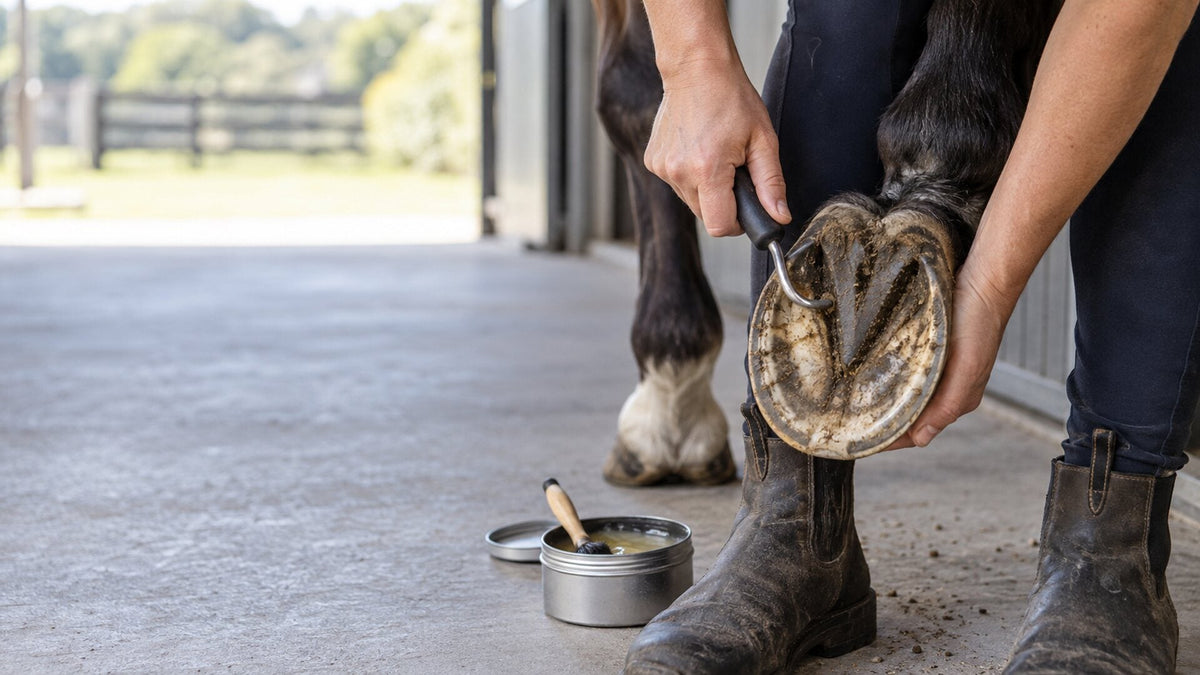
- Pick out each foot. Work from heel to toe with a hoof pick, clearing the grooves either side of the frog. Daily is ideal, and always before and after riding.
- Look and smell. Healthy frog tissue is firm and has no strong smell. Check for stones, nails, cracks and soft spots.
- Feel for heat. Run your hand over the wall and coronary band. A hoof that is noticeably hotter than the others is worth watching.
- Check the shoes. If your horse is shod, look for loose nails, raised clenches or a shoe that has shifted.
Find hoof picks and tools in our farrier and grooming ranges.
How often should a horse see the farrier?
Most horses need a trim or reset every six to eight weeks. Hooves grow continuously, and leaving them too long changes the angles and puts strain on the legs. Shoes left on too long can also cause damage.
Your farrier will set the right interval for your horse. Growth speeds up in the warmer months for many horses, so the cycle may need to shorten in spring and summer. Book the next visit before the farrier leaves, and keep a note of what they find.
How does the weather change hoof care?
| Conditions | Common problems | What helps |
|---|---|---|
| Wet and muddy (winter, wet spring, tropical summers) | Thrush, soft soles, lost shoes, abscesses | A dry area to stand on, daily picking out, protective products on the sole and frog |
| Dry and hard (late spring and summer in most of Australia) | Cracks, chips, brittle walls, bruised soles | Regular trims, a hoof dressing or oil to manage moisture, avoiding hard tracks where possible |
| Changing between wet and dry | Walls expand and contract, which can loosen shoes and open cracks | Consistent routine, a sealing hoof product, watching nail holes |
As the weather warms and paddocks dry out, the focus usually shifts from thrush to cracks and chips. Keep up the farrier visits and keep an eye on the walls.
Which hoof care products do you actually need?
Hoof oils and dressings
Hoof oils and dressings are applied to the outer wall and help manage moisture in changing conditions. Popular choices include World's Best Hoof Oil, KB Green Hoof Dressing, NRG Stride Hoof Dressing and Dr Show Hoof. For larger stables, World's Best Hoof Oil 4L and Kelato HoofPRIME 5L come in bulk sizes.
Greases, creams and salves
Thicker products such as Equinade Hoof Grease, NRG Stride Hoof Cream and Equinade Hoof Salve are often used around the coronary band and heels. Follow the label for where and how often to apply.
Stockholm tar
Stockholm tar is a traditional product applied to the sole and frog, and is often used in wet conditions. See Equinade Stockholm Tar 500ml.
Show finishes
For competition days, a gloss finish such as World's Best Show Gloss or Joseph Lyddy Black-IT gives a clean, polished look. These are cosmetic, so use them on top of your normal routine.
What products cannot do: no oil or dressing replaces regular trimming, a dry place to stand, or a balanced diet. Hoof quality grows from the inside, so talk to your vet or a nutritionist if your horse's feet are consistently poor. Browse supplements once you know what your horse needs.
What are the signs of a hoof problem?
- Thrush: a black, sticky discharge and a strong, foul smell in the grooves of the frog. It is linked to standing in wet, dirty conditions.
- Abscess: sudden, severe lameness, often with heat in the foot and a strong digital pulse.
- Cracks: splits running up from the ground or down from the coronary band.
- Bruising: tenderness after work on hard or stony ground.
- Heat and pain in more than one foot: can be a sign of laminitis, which is an emergency.
If you see any of these, call your farrier or vet. Hoof products support a healthy foot; they are not a treatment for lameness or infection.
The bottom line
Good hoof care for horses is a routine: pick the feet out daily, keep the farrier on a regular cycle, manage wet and dry ground, and use the right products for the season. Most problems are caught early when you look at the feet every day.
Shop our hoof care range, or browse everything in horse health and care. Getting ready for fly season? Read our guide to fly masks and fly veils.
Questions we're often asked
How often should you pick out a horse's hooves?
Ideally every day, and always before and after riding. Daily picking out removes stones and packed manure, and lets you spot thrush, cracks and injuries early.
How often does a horse need a farrier?
Most horses need a trim or shoe reset every six to eight weeks. Your farrier will set the interval based on how fast your horse's hooves grow and how they wear.
Do hoof oils actually work?
Hoof oils and dressings help manage moisture in the outer wall, especially when conditions swing between wet and dry. They support good hoof care but do not replace trimming, a dry place to stand or a balanced diet.
What does thrush look like in a horse's hoof?
Thrush shows as a black, sticky discharge in the grooves of the frog, with a strong, foul smell. It is linked to wet, dirty ground. Clean and dry the foot and talk to your farrier or vet.
How do I stop my horse's hooves cracking in summer?
Keep the farrier on a regular cycle, since long feet crack more easily. Manage moisture with a hoof dressing, limit work on hard ground, and talk to your vet if cracks keep coming back.
About the author
Wes Kennedy writes for Ag Equine Supplies.
Sources
- University of Minnesota Extension, Caring for your horse's hooves
- Alberta SPCA, Hoof Care for Horses